Dive Brief:
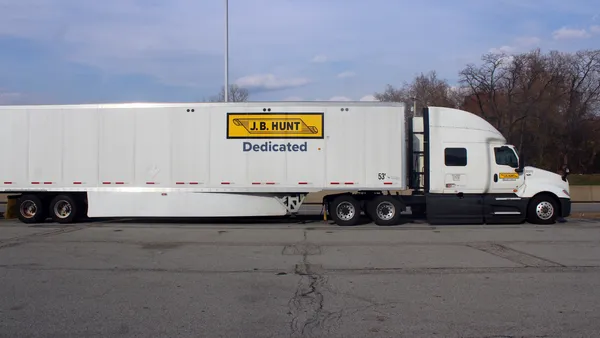
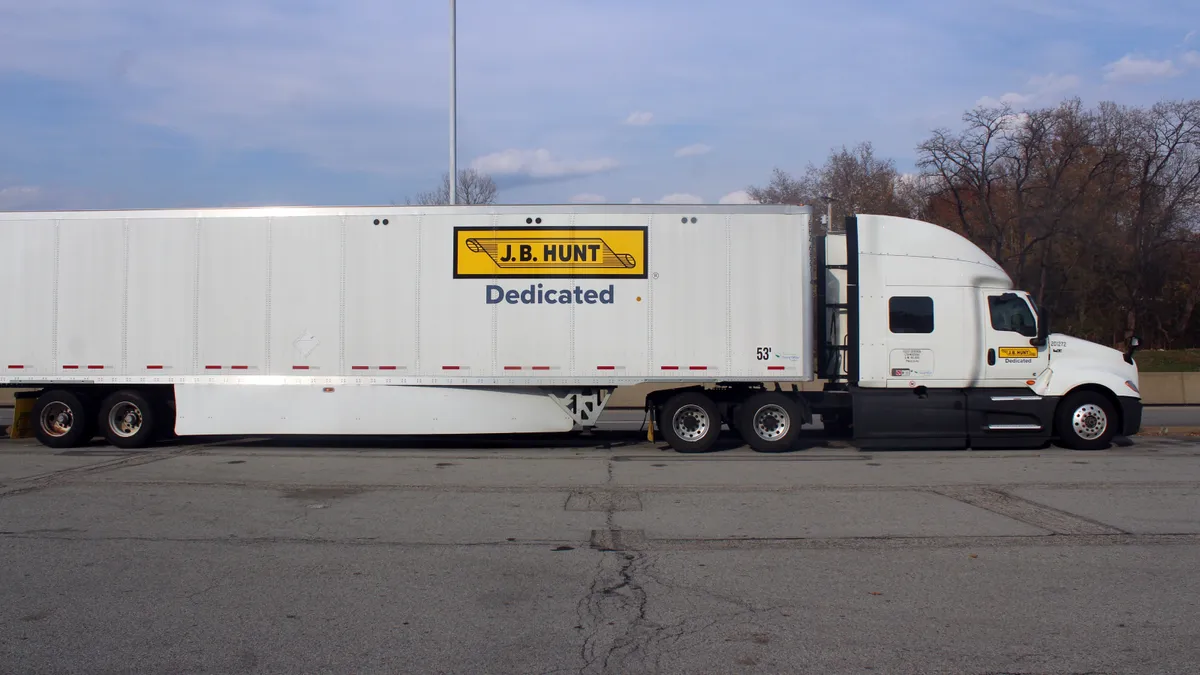
- J.B. Hunt Transport Services on Thursday reported Q3 operating income for its dedicated contract services segment fell 22% year over year to $81.7 million due to higher costs tied to driver-related expenses. Rising expenditures included volatile diesel fuel prices, driver recruitment, onboarding new hires, and increased group medical claims, the carrier said.
- EVP of Finance and CFO Brad Delco said on a call with analysts that higher driver costs, claims and fuel impacted the carrier’s operating income by “over $50 million versus the second quarter of this year.” He noted medical costs alone accounted for over $16 million of that increase, but added escalating driver expenses was “an industry-wide challenge.”
- “We will control what we can through safety, productivity, asset utilization, and disciplined execution,” Delco said.
Dive Insight:
J.B. Hunt previously warned that expenses would rise dramatically in Q3 given the need to institute sign-on bonuses and raise driver pay, Delco said at Morgan Stanley’s investor conference on Sept. 15.
Many carriers have issued pay raises this year as competition for drivers intensified as federal regulators have stepped up enforcement of English language proficiency and tightened access to non-domiciled CDLs.
J.B. Hunt’s driver recruitment efforts succeeded in Q3 as the carrier’s driver count increased 3.5%, Delco said during the call. He noted the company was prepared to make that investment and believes the carrier will recoup those costs as it secures more freight volume.
The carrier’s investments may have shown some early returns as it reported Q3 intermodal volume increased 8% YoY, fueled by transcontinental loads rising 1% while its eastern network volume rose 18% from a year ago. Executives credited some of that success to added drayage capacity but noted leaving some business on the table to ensure it had enough drivers to honor its commitments, EVP and President of Intermodal Darren Field said on the call.
In its dedicated contracted services segment, the carrier’s second largest business by revenue, revenues jumped 11% YoY to $960 million. The carrier had 162 additional revenue producing trucks in its fleet by the end of the period versus last year and 120 more versus the end of Q2. J.B. reported the segment had a 96% customer retention rate in Q3.
Even as as freight volume grows, it typically takes about six months for a new account to get to targeted profitability, EVP and President of Dedicated Contract Services Brad Hicks said on the call.
“While this dynamic creates near-term pressure on results, it also positions us for future earnings growth as these accounts mature,” Hicks said.
Additionally, its integrated capacity solutions brokerage unit reported a 22% YoY volume increase and a 29% jump in revenue per load due to increases in contractual and transactional rates, the company said.
Overall for the quarter, the company reported revenues of $3.7 billion, up 20% YoY. Q3 operating income was up 2% to $247.1 million from a year earlier.
The company said as new driver productivity improves, the carrier will be better positioned for growth.
EVP, COO and President of Highway and Final Mile Services Nick Hobbs said “on the driver front, our driver need to support current and future growth of our business remains elevated.”
“We continue to believe the industry will need to further invest in professional drivers who operate safely and comply with industry regulations,” Hobbs said.