Editor’s note: This is the last installment in a series about the evolution of telematics technology in the trucking industry. Read the previous story here.
Fleets tend to put telematics devices on tractors, not trailers. Nik Werk, managing director of market research firm Werk Insight, has asked fleets why.
“We still work with major 3PLs that will openly admit, ‘There are times when we don’t know where a trailer is,’” Werk said.
Many 3PLs, he found, have similar reasons. Chief among them is compliance, as regulations such as the ELD mandate are aimed at the tractor. Another common reason is ownership. It's more common for fleets to own their tractors and lease or share trailers, making it unclear who would foot the bill for any upgrades.
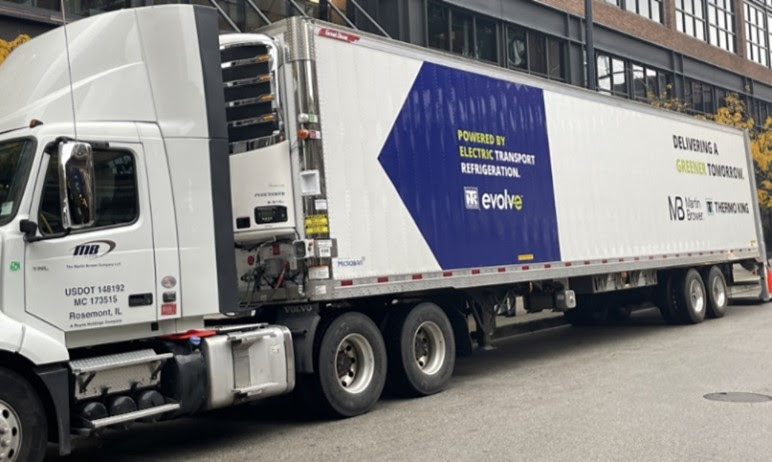
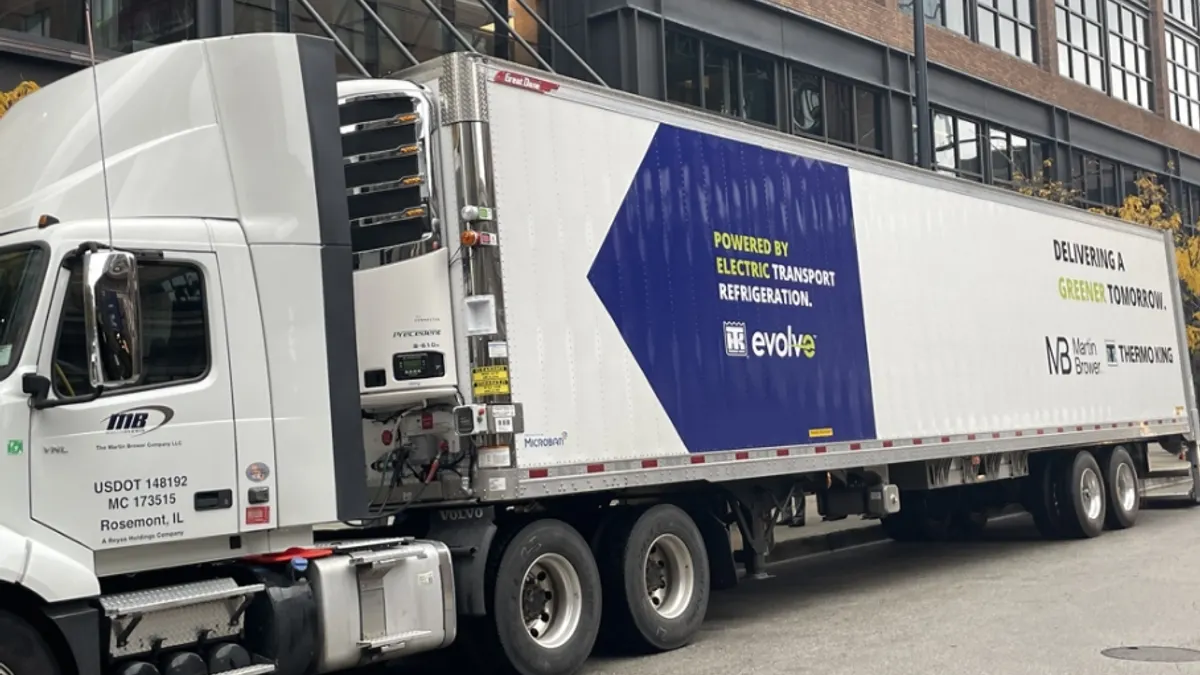
Refrigerated shipping containers present an even starker case, as reefers are among the most resistant to trailer telematics. The norm in the industry is to rely on manual temperature checks, according to Robert Higdon, a director in equipment monitoring at telematics provider Motive. But fleets are starting to reconsider.
“That’s now changing fast,” Higdon said in an email, adding in a later email that “reefer telematics offer one of the clearest ROI stories in fleet tech.”
A clear business case
While compliance may be a top reason to forgo telematics on trailers, it’s actually a driver to install them on reefers. Evolving cold-chain regulations and shipper demands for visibility are pressuring fleets to adjust their longstanding practices, according to Higdon.
Mandates within the Food Safety Modernization Act, for example, require higher levels of traceability within cold chains. And a survey sponsored by Werner Enterprises found 61% of operations executives think real-time visibility is the most important technological capability a transportation partner can have.
Add to that the risk of spoilage and related monetary damages, and the business case becomes even stronger. Temperature control failures in pharmaceutical logistics cost the industry $35 billion a year, according to a 2019 survey, a figure that continues to reverberate years later. Higdon also noted that in addition to losses in freight revenue, monetary damages from temperature issues can result in claims, chargebacks and even lost contracts.
“The [return on investment] in avoiding one incident would probably pay for a whole telematics program,” Werk said.
Darrell Tarry, VP of maintenance at Nagle Companies, sees widespread telematics adoption among fleets of all sizes. His own company, a temperature-controlled food carrier, started exploring Thermo King’s technology in 2012; Nagle now has the vendor’s telematics and fleet management system, TracKing, on 78 trailers.
Telematics enables real-time location tracking and provides the ability to view temperature and cargo integrity, all with specialized reporting, Tarry said. Location data, though basic, is integral to monitoring return air and discharge air condition while in transit. The technology also offers fleets answers regarding temperature-related questions and helps defend against unwarranted claims. And all this data helps ensure FSMA compliance, he noted.
Additionally, even though reefer telematics aren’t in the cab, they still improve the quality of life for the driver.
“Having the ability to check loaded trailer status and enroute temperature settings takes a lot of worry from the driver, letting him concentrate more on arriving to his destination safely,” Tarry said in email. “Additionally, it improves better utilization of a driver’s available hours as they are not required to take time to run to a dealership to get the information downloaded.”
Jumping in
Of the fleets that haven’t invested in reefer telematics, many are not temperature-control specialists, Werk said. Because they don’t view themselves as reefer operators, they may not prioritize solutions specific to their reefers, nor may they have the knowledge and awareness of how to get started in telematics.
Tarry advises that those operators request a demo from the reefer OEM. Today’s solutions offer customizable settings, and vendor relationships with familiar TMS providers can make implementation straightforward.
“There are some upfront costs, but they are minimal,” Tarry said, especially when you consider the risk reduction on temperature-controlled shipments and the potential savings on freight claims.
This mentality is becoming more common across fleets. With dry van rates in a stagnant slump, operators are trying to get as much out of their existing assets as possible. Even something as simple as location data for trailers can help.
Many fleets have had to increase the size of their trailer pools to accommodate more drop-and-hook movements, Tarry said. Being able to see unattended, dropped trailers at shippers and receivers has been critical.
Higdon agreed, noting that two notifications is no longer sufficient for trailers sitting in yards. On-demand location data is not only useful for day-to-day operations but also critical to recovering stolen trailers or high-value cargo.
“The smartest organizations recognize that trailers generate valuable data that directly impacts customer satisfaction and the bottom line,” Higdon said.