Editor’s note: This is the third part in a four-part series about NACFE’s Run on Less – Messy Middle demonstration and findings about ways to decarbonize and improve fuel efficiency. Read the first and second installments here.
Hydrogen fuel cell trucks showed how the tech can perform on daily routes during a recent performance run, demonstrating certain advantages over battery-electric vehicles.
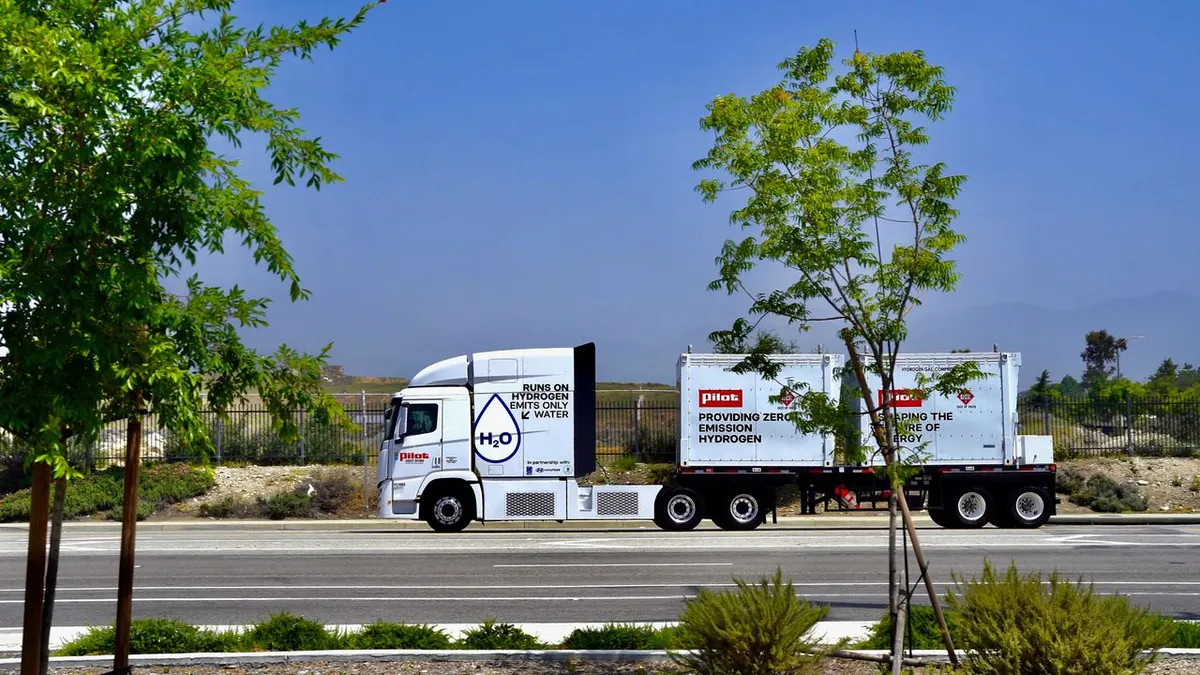
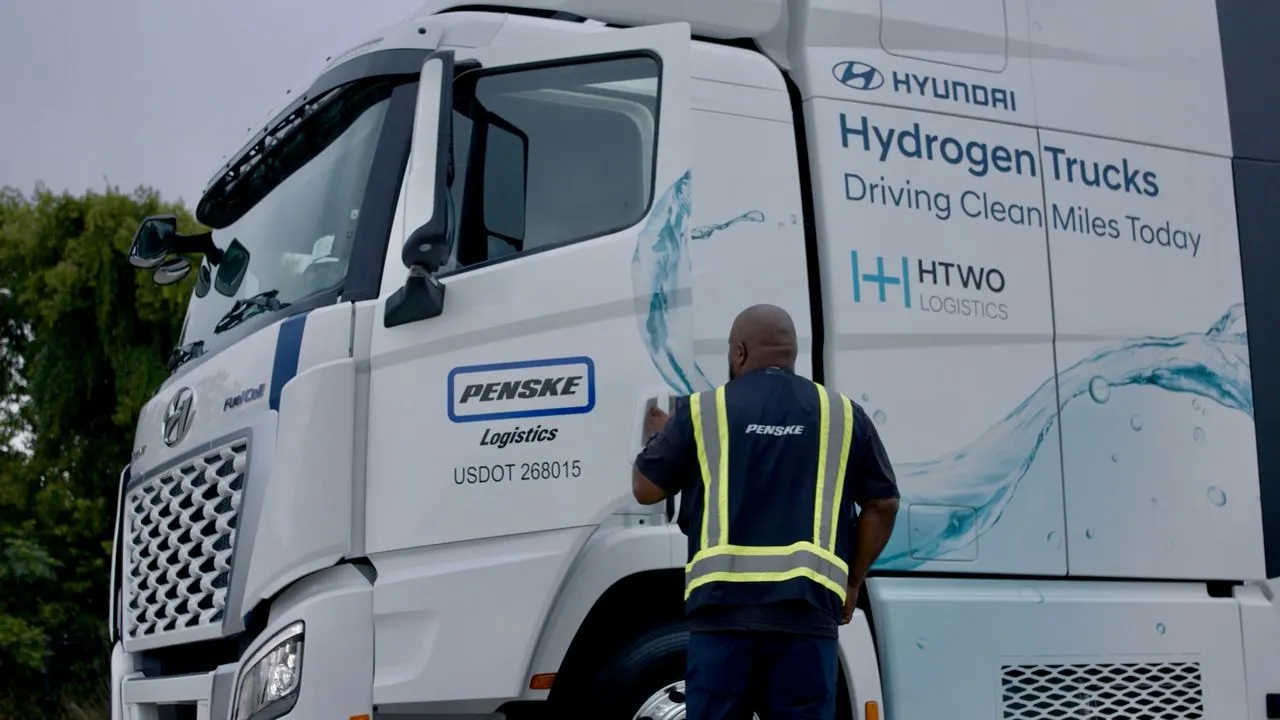
Penske Logistics and Pilot both used a Hyundai Xcient fuel cell Class 8 tractor as part of the North American Council for Freight Efficiency "Run on Less – Messy Middle" run that took place last year. The trucks, running in return-to-base and longhaul freight corridors, “showed genuine operational promise,” NACFE said in a March report while also noting limitations with cost and infrastructure.
“Hydrogen fuel cells are best suited for regional operations with structured refueling access, applications requiring zero direct emissions, and weight-sensitive freight where hydrogen’s mass advantage over batteries preserves payload capacity,” NACFE said in its report. “When infrastructure aligns, hydrogen can maintain diesel-like operational patterns without extended charging dwell.”
“There's a right way to drive a hydrogen truck.”

David Bickmeier
Driving for Pilot, as told to NACFE
The study highlighted how diesel and alternative powertrains actually perform as opposed to manufacturer claims.
Two tractors, two operating environments
Within the hydrogen fuel cell tractor portion of the study, the participating businesses operated in different environments, showing different use cases.
Notably, Penske’s triangular route in the Dallas area, centered at its Lancaster, Texas, automotive-parts delivery operation, had essentially flat terrain. Pilot’s route featured inland foothill terrain spanning Southern California, mainly in the Los Angeles area, and stretching from Thousand Oaks to San Bernardino, and extending south to Oceanside.
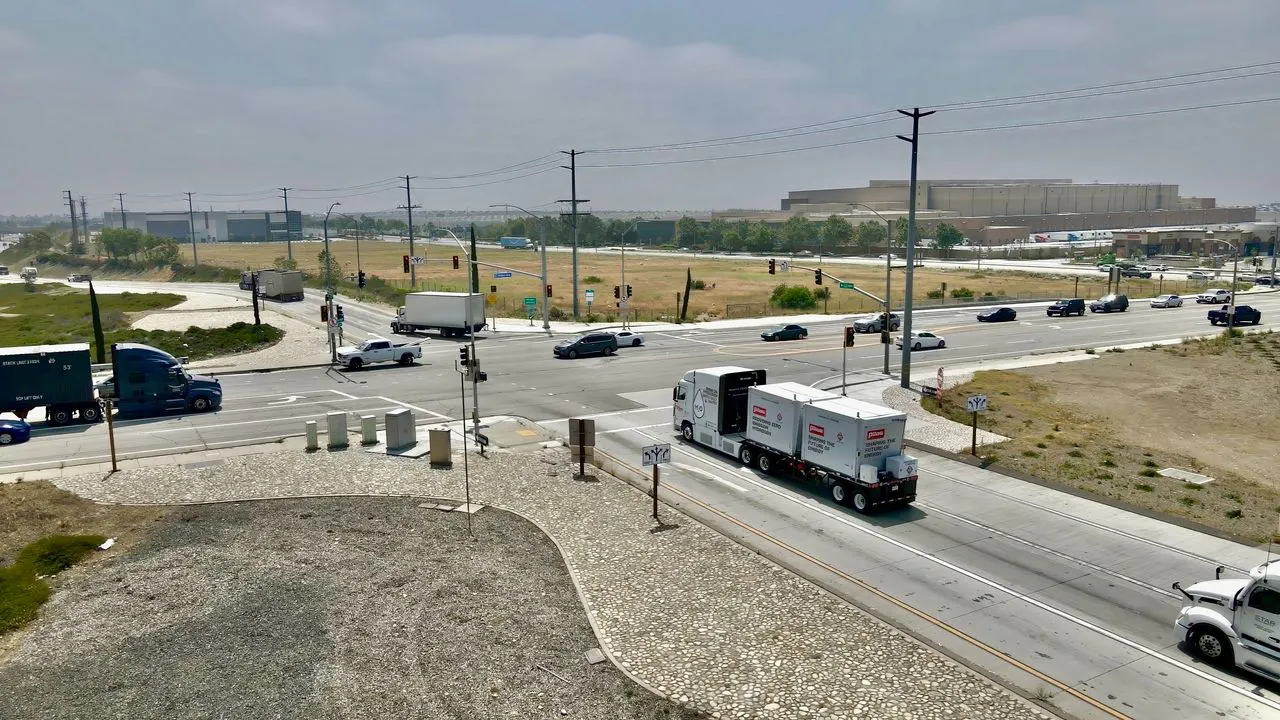
Penske showed how it was hauling automotive and retail freight overnight, while Pilot transported revenue hydrogen bulk freight, the study noted.
Efficiency-wise, the trucks averaged approximately 7.5 miles and 7.8 miles per kilogram of hydrogen, with Pilot benefiting from the variable California terrain but also lower efficiency on hill climbs. While the trucks were speed governed at 56 mph, the report said, hauls in that 50 to 60 mph band yielded high capabilities.
Higher speed bands show hydrogen's potential productivity
| Speed band | Penske | Pilot |
|---|---|---|
| 0 to 25 mph | 0.78 | 2.1 |
| 25 to 40 mph | 5.55 | 7.7 |
| 40 to 50 mph | 8.39 | 10.8 |
| 50 to 60 mph | 10.17 | 11.5 |
SOURCE: NACFE
Factoring in terrain, mileage performance showed strength on flat and light rolling grades, maintaining 7.68 and 7.94 miles per kilogram of hydrogen, respectively, for Penske. That dropped to 5.91 miles for 3% to 6% slopes and 1.87 miles for steeper areas.
Similarly, Pilot’s truck showed 8.4 and 9.71 miles in its fuel ratios for flat and light rolling grades. Mileage dropped to 7.05 miles and 3.24 miles in tougher terrain for a 3% to 6% grade band and above, respectively.
The varied conditions highlight how the tech can be used and how to best incorporate it into a network.
At the same time, Pilot told Trucking Dive that this year it has transitioned away from hydrogen fuel cell truck operations this year but continues to research and develop its alternative fuel offerings. Similarly, Penske Logistics' pilot with hydrogen vehicles ended, but it's continuing to test and evaluate new technology — as evidenced by its recently launched Penske Fleet Lab, the company said.
Drivers’ takes
Along with terrain and infrastructure changes, drivers also noted how the tractors can hold up. Christopher Rawles, driving for Penske, expressed how easy the vehicle is to operate. “You can’t hear it. You don’t feel it,” he said, according to the report.
David Bickmeier, driving for Pilot, described a learning curve to maximizing the vehicle’s efficiency. At first, he averaged about 5.9 miles per kilogram of hydrogen. But that soon changed, he said.
“There’s a right way to drive a hydrogen truck,” Bickmeier said, telling NACFE about his experience. “Once I learned how to drive it, I am getting 9.1 miles per kilogram.”
Despite some of the upsides, the technology appears poised to have higher costs, especially over the next few years, due to infrastructure limitations.
“Weight advantages and operational flexibility create genuine benefits, however, infrastructure scarcity and high fuel costs currently limit hydrogen to demonstration-scale deployment with significant fleet/infrastructure coordination,” NACFE said in its report.