Editor’s note: This is the second part in a four-part series about NACFE’s Run on Less – Messy Middle demonstration and findings about ways to decarbonize and improve fuel efficiency. Read the first part here.
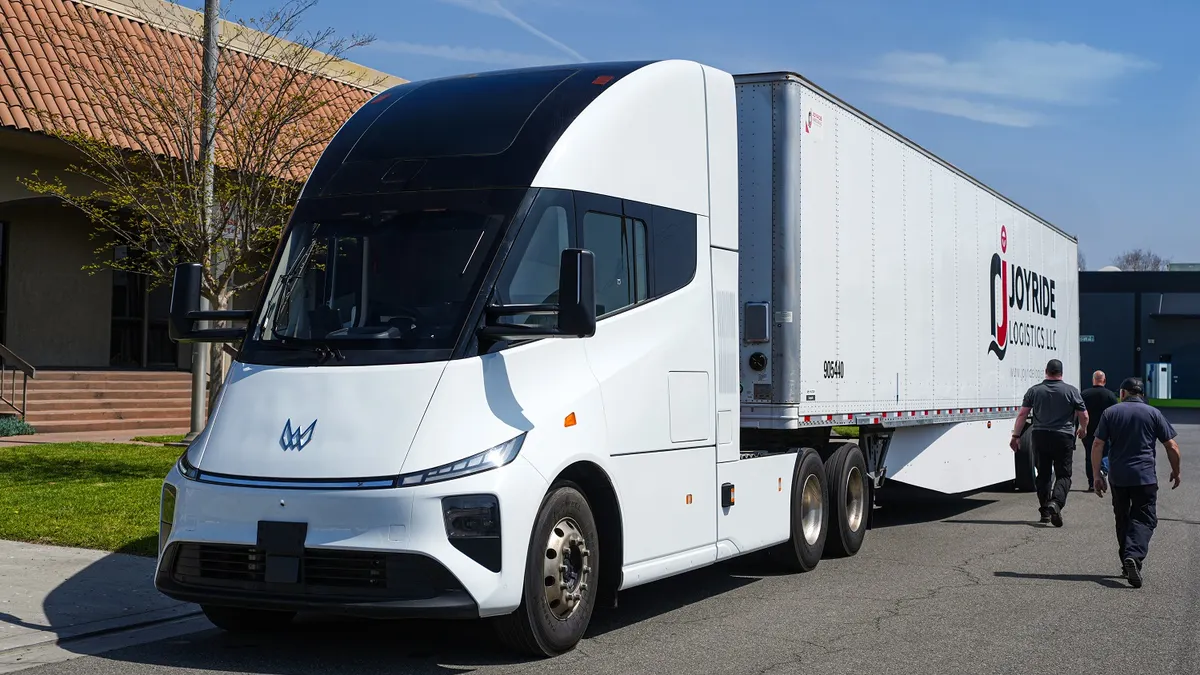
A Windrose sleeper with Joyride Logistics logged 400-plus miles across multiple days last year during a September demonstration run, and it even drove an 875-mile stretch when strategically planning where to charge.
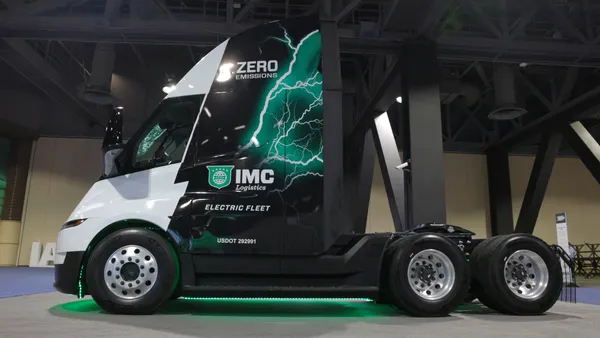
The truck was one of several battery-electric tractors part of the Run on Less – Messy Middle event by the North American Council for Freight Efficiency. It sought to evaluate vehicles across different powertrains, including diesel.
"BEVs are ready for drayage, many regional distribution routes, and emerging long-haul applications in corridors with the right terrain and infrastructure,” NACFE said in its report, noting that longhaul operations need ultra-high power charging at 200- to 300-mile intervals along freight corridors.
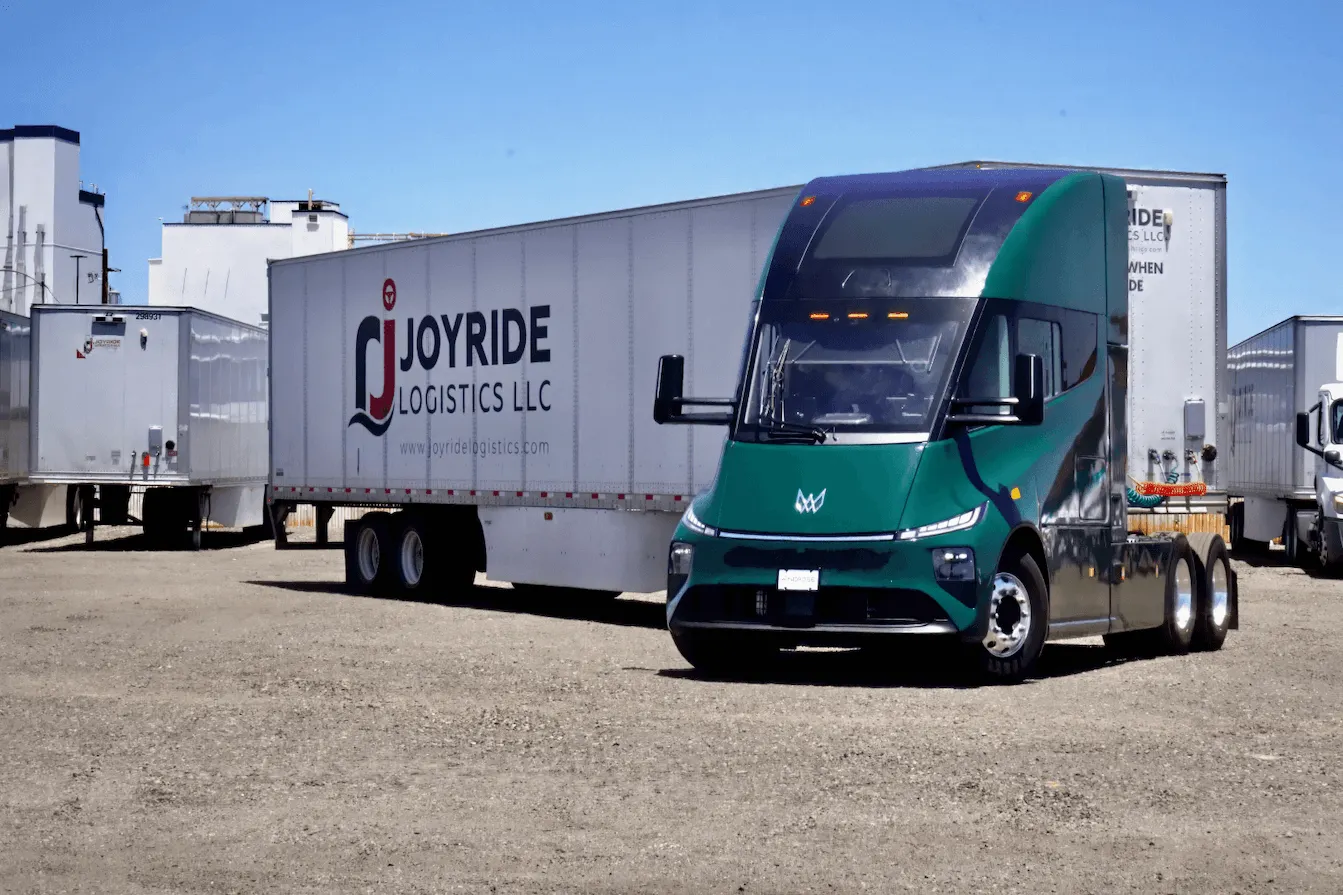
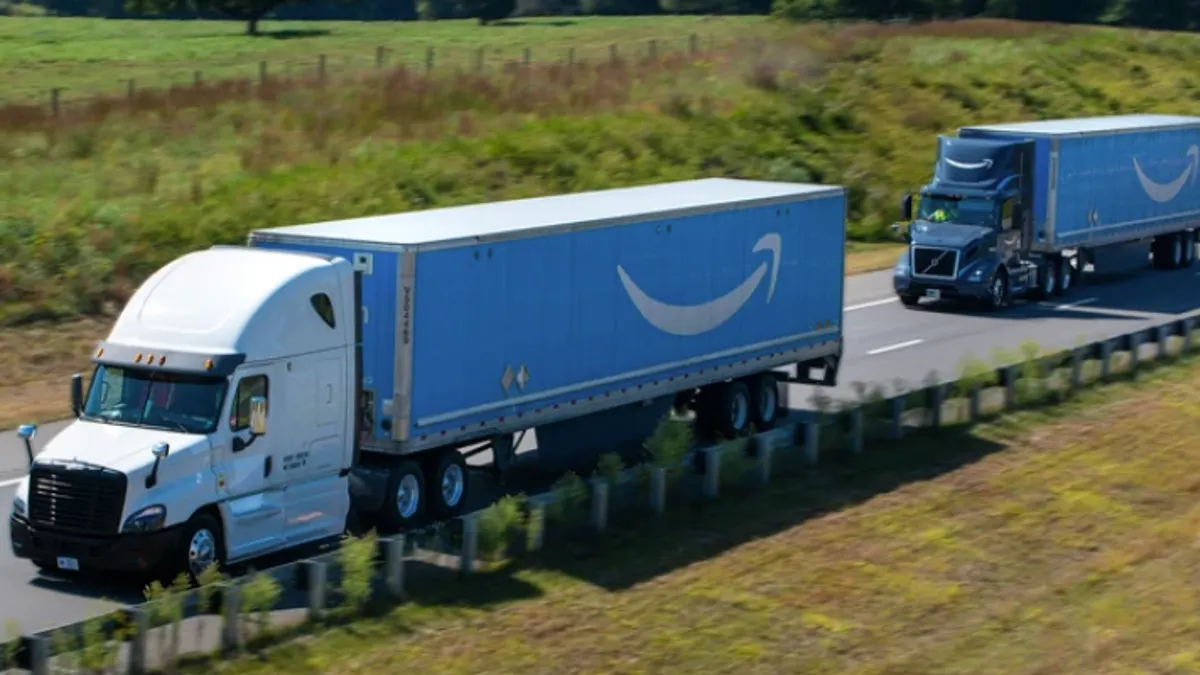
Joyride’s tractor-trailor showed how a carrier could haul freight across five states, from California to Texas, using regenerative braking, high-power DC fast charging and partial-charge strategies, according to NACFE’s operations report released in March. The result for a truck with payloads from around 40,000 pounds to nearly 82,000 pounds was the ability to average 409 miles per active day.
“Our EV fleet is still ... a testing ground where we're trying to get our feet wet,” JoyRide Logistics EVP Kemal Balihodzic told Trucking Dive. “We do not want to overcommit.”
Of the fleet’s 250 power units, less than 10% are BEVs. While the company has an interest in expanding that threshold, scaling depends on dedicated contracts and commitments from shippers.
Analyzing costs
Driving the higher cost of BEVs are the cost of the truck itself and limited infrastructure.
Currently, the trucks cost a premium, but that could eventually change. As of last year, BEVs were nearly 2.5 times as expensive as a diesel truck, but that may drop to less than two times the cost in 2028, according to a NACFE total cost of ownership report released in April. By 2035, the price of a BEV might be cheaper than the traditional power unit.
"BEV costs are declining sharply, dropping from around $425,000 today to a projected $300,000 by 2028 to sub-$230,000 by 2035. This is driven not only by cheaper battery packs, but by a shift in manufacturing strategy,” the report said. Notably, OEMs such as Tesla and Windrose are standardizing the equipment, thereby driving down costs, the report added.
Total cost per mile estimates show some parity — and even savings — in the future
The more expensive BEVs are one piece of a cost analysis. Other factors ranged from resale value to infrastructure costs, including the use of public charging, as part of the cost per mile. Additionally, NACFE projected that manufacturing from China will enter the U.S. market by 2035.
“I think there's still a long way to go,” Balihodzic said. “Diesel still wins by so much because you can cover long hauls, better fueling, longer range, better infrastructure.”

Hours of service regulations also can create barriers, which can be particularly poignant with a charging time taking 45 minutes. To comply with federal rules for drivers, the business used a mobile charging station in its yard.
To change that dynamic, major investments in infrastructure are needed, Balihodzic said. He added that his company is still waiting for a Tesla Semi it ordered in 2017.
The Arizona-based carrier relies on Amazon business for half of its operations, and JoyRide aims to operate 300 trucks by the end of this year, Balihodzic said.
Assessing performance
While manufacturers can list range capabilities of their equipment, the demonstration run seeks to measure how fleets actually perform in real-world conditions.
"These were not controlled demonstration runs on hand-picked routes,” NACFE said in its operations report. “Drivers moved commercial freight on regular schedules, encountered real traffic and weather, carried payloads ranging from roughly 38,000 lbs. to more than 80,000 lbs., and charged when infrastructure and operational dwell time allowed rather than when conditions were ideal."
Those real-world conditions routinely yielded contrasts between advertised ranges and actual performance, NACFE’s report found.
Battery electric trucks demonstrate capabilities
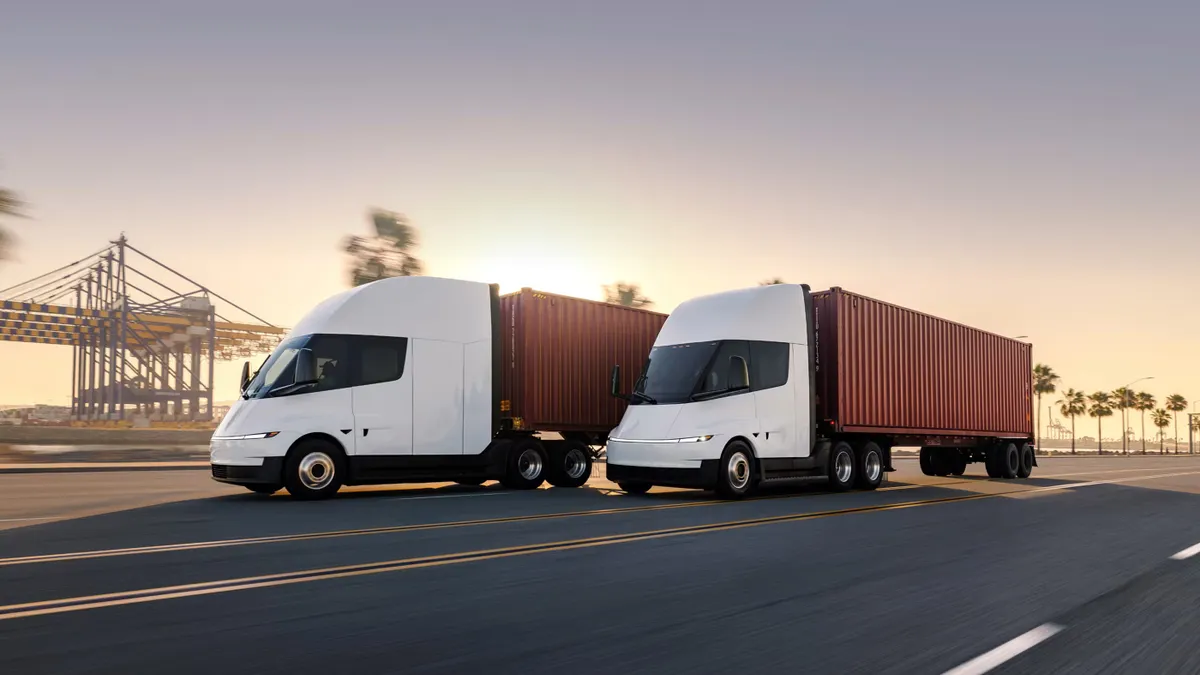
Route planning showed up across the fleets in the study, with 4Gen Logistics charing its truck during port queues, dwell time and shift transitions. Saia, which had two Tesla Semis in the run showing local and longhaul LTL applications, had chargers behave similar to diesel detours on its shorter route, NACFE noted. In that case, “[c]harging was largely absorbed into existing dwell at depots and facilities,” the report said.
The routes in the run also avoided sustained mountain passes with limited exposure to grades of 6% and above.
Matt Copot, VP of fleet management at Saia, said in the report that the carrier evaluates "what works from a business case perspective, where technologies exist and how we can leverage those, particular emerging technology, and how we can help our customers work toward reducing mileage as well as increasing utilization.”
The most successfull deployments, according to NACFE, involved “flat-to-rolling terrain, return-to-base or corridor operations, moderate daily ranges, cube-limited freight, and access to depot and corridor fast charging. In these conditions, BEVs functioned as working assets, not demonstration trucks."
The report also concluded that BEV technology is at an inflection point.
“Battery-electric trucks have moved past the demonstration phase for regional applications and are entering viable long-haul service in selected corridors,” the report said. “However, terrain sensitivity and infrastructure dependence require corridor-specific validation.”