The aftermath of a Supreme Court decision regarding freight brokers is leading several large carriers and brokers to highlight their competitive advantage.
Trucking leaders on Q2 earnings calls in July suggested the high court’s decision in Montgomery v. Caribe Transport II et al. is increasing challenges for certain businesses, where small brokers may be unable to absorb higher insurance costs and low-quality carriers may be passed over.
“The Montgomery ruling could structurally change the economic incentives for a large share of the brokerage space that all too often have pursued the cheapest possible capacity with less regard for carrier safety and quality,” Knight-Swift Transportation Holdings CEO Adam Miller said.
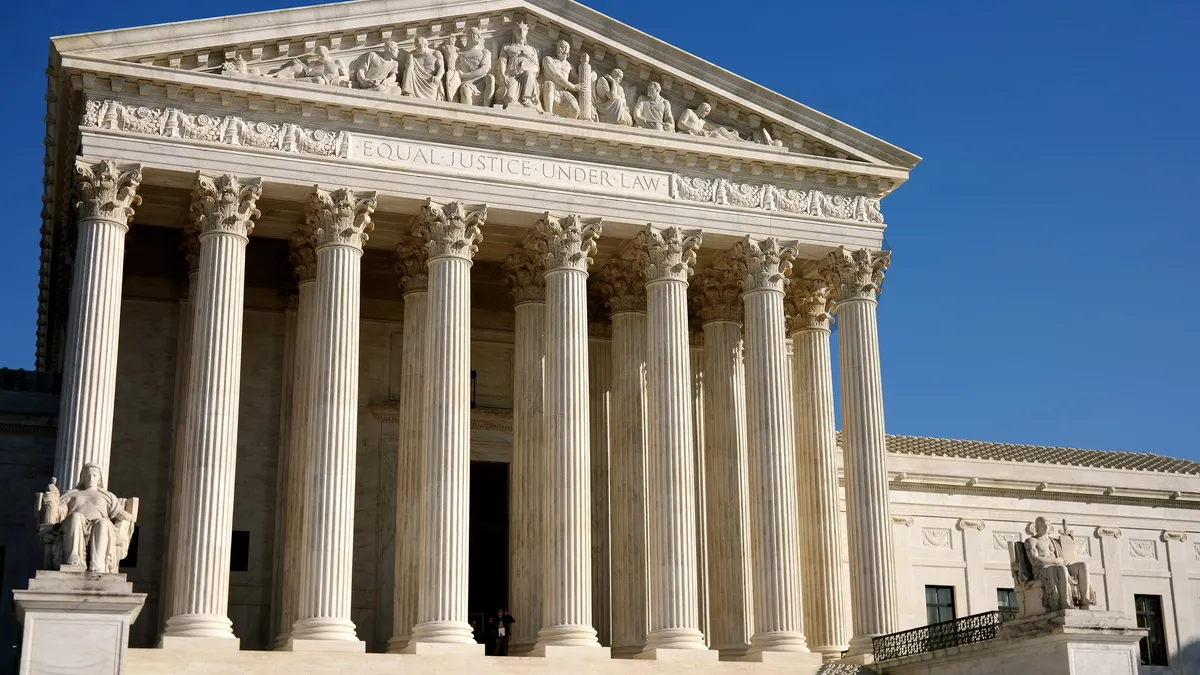
The unanimous opinion resolved a split in lower courts, setting a precedent that federal law does not preempt state tort when a safety exception is present. That means federal rules that foster the flow of interstate commerce do not insulate a freight broker from potential liability in this area, according to the Supreme Court decision from June.
Top carriers say the aftermath favors them due to their safety records. Knight-Swift’s Miller said the company believes the court’s ruling will further tighten the truckload market as shippers and brokers raise standards and insurance costs increase. Schneider National CEO and President Jim Filter shared a similar view.
“There's many brokers that are likely to avoid carriers that have conditional or unsatisfactory ratings from the FMCSA,” Filter said. “That's probably a few percentage of the market. And while the drivers might go to work for another carrier, it's likely that they're going to be held to a higher safety standard. So even transfers to a new company potentially reduces capacity.”
But the matter could take several years to play out, Landstar System VP and CFO Jim Todd suggested.
“Now we've got basically half the country that we used to be able to submit a very well-crafted motion for summary judgment and usually get out a very high degree of probability, those now, we'll have to fight those, right?” Todd said, adding that the other half of states already aligned with the Supreme Court’s approach that state tort claims could move forward in negligent selection lawsuits.
Landstar operates as an asset-light model involving brokers, but leaders there say their standards are allowing them to take market share after the Montgomery decision.
Landstar President and CEO Frank Lonegro suggested a major new broker addition that the company landed in Q2 may have been affected by the then-pending Supreme Court decision. But the legal effects are far reaching, Lonegro added, where success will rest with those who prioritize safety, security and service.
“I think that what you're seeing is in an environment where small- to medium-sized brokers, you know, are concerned about an existential risk,” Lonegro said. “And I think we're seeing our pipeline of potential agent candidates continue to increase.”
Additionally, carriers appear to be migrating to J.B. Hunt Transport Services, moving away from small brokers, COO and President of Highway and Final Mile Services Nick Hobbs said. “From our standpoint, the Montgomery decision, it's just increased a lot of focus in the carrier selection and broker responsibility,” he said.
While Landstar suggested their insurance cost changes were overall flat and Knight-Swift said their insurance increased by multiples just after the Montgomery decision, freight broker RXO suggested the insurance industry is integrating changes.
“While the situation is fluid, we are expecting the insurance market to be much more selective than in the past, which plays to RXO's advantage given our stronger infrastructure and tracking capabilities,” CFO Jamie Harris said on an August earnings call.
The company believes that, unlike RXO, many brokers in the industry both small and large “are significantly underinsured, and those companies are likely to face larger increases in insurance capacity as well as premiums,” Harris said.